Maily SERRA. Villaggi rurali medievali tra abbandoni e continuità di vita.

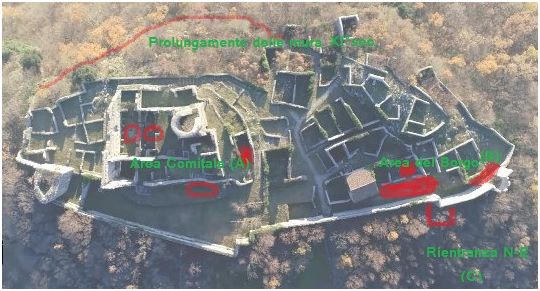
L’area di studio che qui si presenta si trova nella porzione centro-meridionale dell’isola, in quella che nel Medioevo era la frontiera del Regno di Cagliari con quello di Arborea. All’interno del Regno calaritano costituivano le due circoscrizioni amministrative denominate Curatoria di Trexenta e Curatoria di Siurgus. Villaggi …

Leggi tutto nell’allegato: Villaggi rurali medievali tra abbandoni e continuità di vita

Autore: Serra Maily – maily.serra@gmail.com

Sandrino Luigi MARRA, Regolamentazione dell’uso delle acque in un comune del meridione di Italia 1809-1939.

L’uso delle acque pubbliche ovunque e dovunque ha sempre creato dissapori, litigi, contenziosi di vario genere, ed in passato ove spesso lungo i corsi di fiumi e torrenti vi erano impianti produttivi che funzionavano con la forza motrice di origine idraulica, le dinamiche di uso erano oltremodo complesse e nel tempo abbisognarono di una regolamentazione particolare, oltre ad una sorveglianza costante da parte dei comuni dell’uso e dello sfruttamento delle stesse.
Un esempio particolare era il Torano a Piedimonte di Alife (oggi Matese), il quale nel suo corso e lungo il suo letto ospitava diverse attività legate alla forza motrice idraulica. Mulini, piccole attività artigianali per la lavorazione della carta, ma in particolare il cotonificio di Piedimonte che sfruttava la forza motrice generate dalle acque del Torano per far funzionare le proprie macchine, le quali nel 1845 ammontavano a 170 telai meccanici modello Jacquard mossi da tale energia, con un impiego complessivo di 1200 operai tra uomini e donne. Ma queste non erano le uniche attività che ne facevano uso, poiché con la stessa forza motrice per decenni funzionarono segherie idrauliche, ben 4 diversi molini, due cartiere, alcune concerie, diverse piccole industrie per la lavorazione della lana, di panni di lino, ed anche tintorie e gualcherie, ma in particolare le acque erano usate come ancora oggi per l’irrigazione dei campi. In questa attività le acque del Torano venivano irreggimentate in un dedalo di canali e canaletti che offrivano la possibilità di irrigare campi anche lontani alcuni chilometri dal letto stesso. Tale sistema era poi gestito dalla amministrazione del comune, attraverso dei regolamenti, con la sorveglianza della distribuzione delle acque affidata al corpo di polizia municipale ed il pagamento di una tassa di uso. Nel caso del Torano che attraversava più di un comune, il regolamento veniva strutturato dai rappresentanti dei comuni stessi toccati dalle acque del torrente, riferendosi comunque ad un regolamento legislativo regnicolo.  In questo caso specifico, ovvero il Torano parliamo di un torrente che aveva al tempo, come oggi anche se irreggimentata, una portata di acqua che variava da 1000 a 2500 litri al secondo, ben sufficiente nel XIX° secolo all’uso ed alla bisogna industriale ed agricola.,,

Leggi tutto nell’allegato: Regolamentazione uso acque

Autore: Sandrino Luigi Marra – slmarra@libero.it

Gerard FLYNN. Fulacht Fíadh and the Brewing Conundrum, A critical review evaluating the function of fulachta fiadh and the brewing of beer.

The objective of this project was to reconstruct a replica fulachta fiadh to reinterpret and assess its possible function.  The initial idea for this came from the work of Bill Quinn and Declan Moore in 2007 who re-evaluated the function of the fulachta fiadh by successfully brewing an alcoholic beverage and trying to suggest that these were potentially used as brewing sites. At the time Billy and Declan were getting praise and critisem about this theory. This was a great opportunity to keep the debate about the function of fulacht fiadh alive so I decided to do my final yeaar thesis to recreate the experiment and to try to keep it as authentic to what the Irish Bronze Age person had. The idea to keep it tradatioanl as possible and not to use any modern techniques, to use locally sourced materials, construction methods, plants that would have been sourced seasonally and to extract yeast naturally from the air or from the skin of the fruit or plants used in the beer. Unlike Billy and Declan who used brewer’s yeast in some of their experiments.
There has been a presence of alcoholic beverages/ beer in Ireland as early as the Neolithic right up to the present. Some of the earliest examples come from Scotland. According to Max Nelson (2005, 12) the Balfarg site contained fragments of grooved ware. The residue from the pottery suggested that a variety of cereals, pollen, meadowsweet and henbane contained in the pots, which can be all used for flavourings and for fermentation, some are still used in breweries today.   There is also evidence of this through the presence of beaker pottery, but the question that has never been answered is where and how did the Bronze Age people brew beer form a cereal based alcoholic beverage. The fulacht fiadh are an enigmatic monument, which has no obvious function. The ideal of mashing cracked malted barley in the trough of the fulacht fiadh has proven an effective way of mashing large quantities of wort to convert to an alcoholic beverage.
The initial experiment consisted of malting whole barley, by encouraging germination and heat treatment to stop the acrospire from growing further. Cereal processing with a rotary quern was attempted, which lead to the mashing of the cracked grain in the trough, which produced sweet wort. For flavourings and fermentation, organic apples, strawberries, blackberries bog myrtle and heather were used due to the time of the year there were no other natural yeast bearing plants available. Originally gas chromatography was used to evaluate the percentage of alcohol-achieved from the experiment. But for the proposes of this project and not having access to a gas chromatogpher a hydrometer was used to read the gravity, essentially it reads the volume of sugar in the liquid. The hydrometer would be used to read the gravity throughout the fermentation process nearing the end there would be less sugar meaning the yeast has consumed it and convert it into alcohol. The reading at the beginning and at the end will give a close approximation of the alcohol percentage.
During the Bronze Age, the production or brewing of alcohol was clearly achievable; also, the trough of a fulachta fiadh has also proven that large quantities of beer could be created, to facilitate a society or community…

Leggi tutto nell’allegato:  Fulacht Fíadh and the Brewing Conundrum

Autore: Gerard Flynn

Alessandra FRAGALE. Il ruolo delle donne nel culto della Bona Dea-Magna Mater-Cibele in Campanika e ad Aquileia.

Il Culto della Bona Dea viene attestato da molte fonti letterarie nell’Impero romano così come anche dalle iscrizioni ma, come avviene anche per altre divinità, l’individuazione di un determinato periodo di sviluppo di tale culto è molto difficile. In un primo tempo il suo nome era un epiteto attribuito a varie dee, quali Venere, Maia e Cibele, in seguito venne applicato per identificare Fauna, moglie e sorella di Fauno e quindi assimilabile a Cibele . Secondo il mito, la dea avrebbe bevuto vino puro, contravvenendo così al divieto cui dovevano sottostare le donne romane e, per questo motivo, sarebbe stata frustata a morte dal marito con un ramo di mirto. Secondo un’altra versione, Fauna è figlia di Fauno ed avrebbe resistito sia al vino che alle frustate con cui il padre voleva piegarla ad unirsi con lui. Quale dea feminarum , ella disciplinava l’uso del vino da parte delle donne e, se non altro in epoca arcaica, presiedeva all’ingresso delle ragazze nella società degli adulti. Alcuni elementi, infatti, lasciano scorgere nel complesso cultuale di Baia un’antica istituzione iniziatica…

Leggi tutto nell’allegato:  Il ruolo della donna nei culti femminili di Bona Dea-Magna Mater -Cibele in Campania ed a Aquileia

Autore: Alessandra Fragale – alessandra.fragale@virgilio.it

Ricerche, Studi, Tesi e Saggi