E’ inaudito, mai, da nessuna parte, ci si occupa dell’ampia regione a Sud di Roma o, per maggiore precisione, talvolta se ne parla e si descrive perfino, ma sistematicamente si menziona qualche esemplare ciociaro appartenente ad una certa diffusa fauna nazionale oppure peculiarità folkloriche o gastronomiche chissà dove scovate e null’altro.
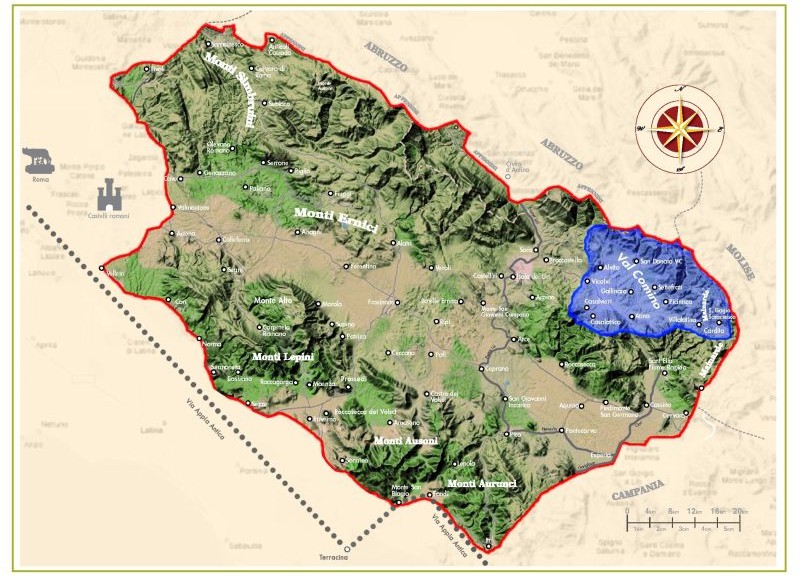
Questa regione racchiusa tra Appennini e Mar Tirreno, il cui confine settentrionale si lascia iniziare a Velletri e a Palestrina e a Tivoli, fino al Garigliano e che dopo non poche denominazioni che l’hanno individuata nel corso di almeno trenta secoli, oggi comunemente viene connotata col termine ‘Ciociaria’ continua ad essere la regione più emarginata e soprattutto sconosciuta dell’Italia, dico ‘continua’ perché già pochi anni dopo il fatale 1870, per esempio, una commissione statale di indagine lamentava la evidente e immotivata emarginazione nella quale era stato tenuto fino allora il territorio a Sud della capitale, la nobile ‘Ciociaria’.
Eppure si tratta della regione più antica e più storicamente connotata dell’Italia, prestando fede alle leggende e storie che la riguardano, più antica perfino della civiltà nuragica della Sardegna. Agli inizi fu la terra dei Volsci e degli Ernici e dei Saniti, poi la Regio Prima di Augusto, poi, dal Tevere in giù, Latium, poi Campagna di Roma…
In questa regione è nata la storia d’Italia, le vicende della leggenda e dell’epica dei classici è qui che si sono svolte: Ulisse, Enea, i Volsci, i due fratelli e poi Caio Mario, Vipsanio Agrippa, Cicerone, Aulo Irzio, Attilio Regolo, L. Munazio Planco, Giovenale…. Qui sono state registrate le prime parole in lingua italiana, qui è stato stampato il primo libro in Italia, qui è stata scoperta la punteggiatura e il carattere corsivo, qui parlato e illustrato per la prima volta nella storia dell’uomo, del valore e dell’etica del lavoro, qui per la prima volta promosso e diffuso il significato di studio e di istruzione, qui gettate le prime basi della organizzazione democratica di una comunità e da qui, da Montecassino, diffuse e fatte conoscere in Europa. Tali conquiste e realizzazioni in certi libri si chiamano: civiltà!
Qui sono nati i monasteri e cenobi che poi si sono estesi in Europa e che in molta parte ancora ne costellano i siti originari, qui da papi ciociari sono stati promossi e sostenuti e incoraggiati i grandi santi quali San Francesco, San Domenico, S. Antonio, San Tommaso d’Aquino che hanno fatto e continuano ancora a fare la storia morale e filosofica e religiosa dei continenti. Qui è nata Roma, su questo suolo sulla riva sinistra del Tevere, qui Roma ha iniziato la sua ascesa, qui ha trovato nel corso dei secoli il suo sostegno e il suo sostentamento, questa è stata dall’inizio anche la vera e propria sacrestia della Chiesa.
A che cosa dunque, a quali fatti, imputabile tale ghettizzazione e perfino segregazione oggi ancora attuali? Ognuno può dare la sua risposta, tra queste una è sempre ricorrente: imperdonabile ignoranza, ingiustificabile misconoscenza, dovute a chi, a che cosa?
Quanto più sopra citato è solo un accenno, un embrione dell’inestimabile giacimento da disseppellire: un patrimonio che, pur senza Caravaggio e Raffaello e Michelangelo e Leonardo e Tiziano, è sicuramente il più ricco del Paese.
Oggi in realtà questa regione si presenta, in aggiunta, frantumata e spezzata nella sua omogeneità e integrità secolari in quanto divisa in tre province da circa ottanta anni col risultato, inammissibile e anche esso frutto di crassa ignoranza imputabile alle pubbliche istituzioni e non solo, che le tre province si considerano ormai avulse ognuna dall’altra, non si riconoscono, quindi si ignorano i secolari legami e affinità e comunanze: si è arrivato al punto perfino grottesco che non si conosce più che cosa sia la ‘Ciociaria’, come si chiama e chiamava storicamente la regione che si abita: in effetti è la provincia di FR a essere divenuta ormai ‘Ciociaria’: le pubbliche istituzioni a partire dalla Regione Lazio loro stesse seminano e ufficializzano il degrado cognitivo, basta leggersi i loro siti pubblici: la precarietà ne è il contrassegno.
La stampa nazionale, tutta o in parte, normalmente si crea una propria configurazione personale da identificare come ‘Ciociaria’, qualche rivista la circoscrive addirittura nello spazio racchiuso tra Anagni, Ferentino, Acuto, ecc.!! Non pochi importanti giornali vedono ‘Fiuggi’ o ‘Sora’ in ‘Abbruzzi’ (al plurale! ancora oggi). Senza ricordare che il pur benemerito Touring Club è fermo a quaranta anni fa e che, in aggiunta, novelli battisti di oggi hanno fatto uscire dal cappello e perfino brevettato nuove terre da scoprire e da investigare!! le “Terre di Comino” che, grazie a soldi pubblici, diffondono e fanno conoscere a mezzo di eleganti tabelloni stradali ricchi di informazioni, senza che nessuno degli addetti (sindaci e assessori provinciali o regionali, stampa, ecc.) nulla obiettino.
Paradossale, al contrario, il fatto che altrove, specie al di là delle Alpi, certe emanazioni ciociare trovano e godono di costante attenzione e riguardo e mi riferisco in particolare al costume ciociaro e alle modelle e modelli, fatti continuamente segno di iniziative e manifestazioni, laddove nella loro terra di origine altrettanto paradossalmente sono oggi ancora ignorati e sconosciuti, a detrimento grande della educazione e gratificazione della comunità e, in aggiunta, a mutilazione di possibili risvolti di richiamo turistico e culturale oggettivamente impliciti e consolidati in tali soggetti. Si escogitano e mettono in campo, investendo cifre considerevoli, iniziative e realizzazioni e strutture che, a parte i tagli di nastro o le inaugurazioni, assolutamente nulla e niente lasciano dietro di loro, come si vede in giro.
Michele Santulli – michele@santulli.eu